No products in the cart.


How Long Do Wooden Swing Sets Last? (And How to Make Yours Last Longer)
The honest answer is: it depends entirely on what the set is made of, how it is installed, and how much attention it gets each year. Most families searching for how long do wooden swing sets last find the same generic range quoted everywhere: 10 to 20 years. That range is real, but it describes two very different outcomes. A well-built cedar set with professional installation and regular maintenance sits at the top of that range. A thinner-boarded flat-pack set left untreated in a New Jersey backyard sits at the bottom, or falls short of it entirely.
What the research says about wooden swing set lifespan
Multiple industry sources converge on a consistent range. Backyard Discovery states that properly treated and maintained wooden swing sets typically last 15 to 20 years. AAA State of Play puts cedar and redwood at 15 to 20 years with regular staining. Recreation outlets reviewing wood versus metal structures note that quality wooden sets can remain functional for 15 to 25 years or more with proper care. Rainbow Play Systems, whose sets are sold at Rainbow Direct in Parsippany and Flemington, states on its website that a well-maintained cedar set should last 25 years or more. That figure reflects the build standard of a full-dimension cedar set with commercial-grade hardware, not a flat-pack big-box alternative.
The SwingSet Co. makes a point worth highlighting: cedar species alone does not guarantee longevity. What matters is the dimensions of the boards used. A 2×4 cedar frame behaves very differently over time than a 4×4 cedar frame. A 2×6 swing beam is structurally weaker than a 4×6 beam of the same species. Full-dimension construction is the variable that separates a 10-year set from a 25-year set, and it is one of the hardest things to assess from a product photo or a website listing.
Why New Jersey is harder on swing sets than most states
New Jersey sits in a four-season climate that is genuinely demanding on outdoor timber. Understanding what your set is up against helps you prioritize the right maintenance at the right time of year.
Freeze-thaw cycling
Every autumn and winter, water penetrates any small cracks or checks in the wood surface. When that water freezes, it expands. When it thaws, it contracts. Over multiple cycles, this mechanical action widens existing cracks, loosens joint connections, and accelerates surface deterioration. A set that is properly sealed before winter enters this cycle with significantly less moisture in the wood, which reduces the damage substantially. A set that has not been sealed in two or three years accumulates damage from this process faster than the wood can recover.
Humid summers
New Jersey summers bring sustained humidity that keeps timber moisture levels elevated for months. High moisture content encourages fungal growth on unsealed wood surfaces, particularly on horizontal boards like decks and roofs where water pools rather than drains. Cedar’s natural oils resist this better than pine, but the resistance diminishes if those oils are not periodically refreshed with a quality sealant.
Clay-heavy soils
Significant parts of New Jersey, particularly in Hunterdon County and Morris County, have clay-heavy soils that retain moisture around anchor points. Posts and footings in clay soil are exposed to more ground moisture than the same set in sandy or loam soil, which accelerates wear at the base of structural members. Proper installation that accounts for local soil conditions, and using the right anchoring method for your yard’s drainage, makes a meaningful difference at this level.
The five factors that most determine how long your set lasts
1. Timber quality and board dimensions
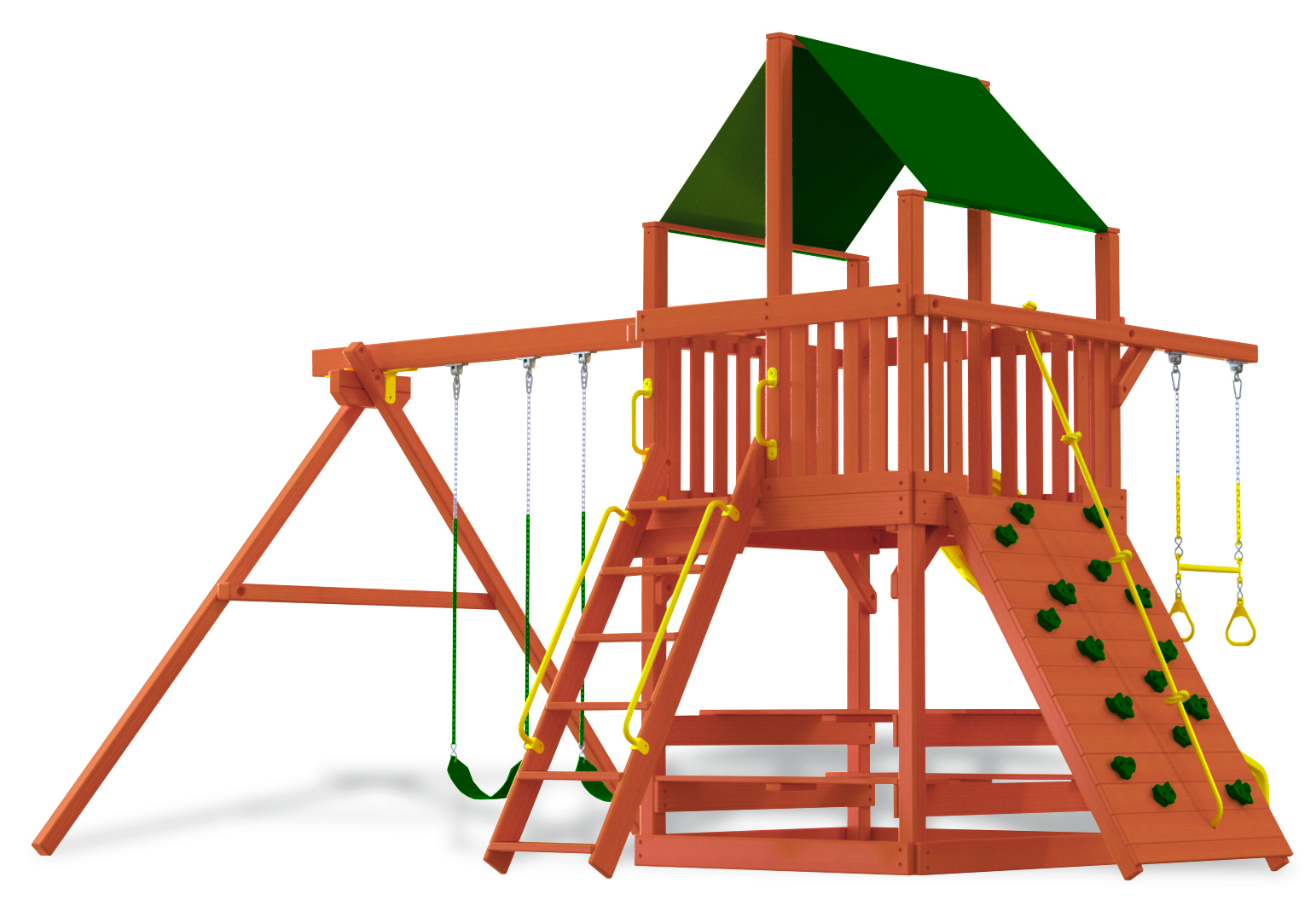
As noted above: species matters, but dimensions matter more. Full-dimension 4×4 uprights and 4×6 swing beams carry load and resist warping far better than thinner equivalents. Rainbow Play Systems uses big-beam cedar construction throughout, which is one of the core reasons the sets carry a lifetime structural warranty. You can browse the full range at Rainbow Direct to see how the series differ in structural scale.
2. Installation quality
A set that is not level will rock in its anchor points every time a child swings. That constant movement loosens hardware faster, stresses joint connections, and accelerates wear at the base. Professional installation on a properly prepared, level surface eliminates this from day one. Rainbow Direct’s professional delivery and installation service ensures the set is correctly anchored and levelled for your specific yard, including accounting for any slope or drainage issues. The website notes that the ground area should be clear of rocks, stumps, and structures and prepared to a level surface before installation day.
3. Sealing and staining frequency
This is the single most controllable maintenance variable. Unprotected cedar will last up to 20 years with careful maintenance, but without it the lifespan shortens considerably. A quality water-repellent stain creates a barrier against moisture, UV damage, and fungal growth. Most sources recommend applying sealant annually on sets in heavy use, or every two to three years for sets in good condition. The Rainbow Direct website’s guidance on staining reflects the same approach: regular resealing is the core of long-term wood protection in a northeast climate.
4. Hardware inspection and tightening
Dynamic loads from swinging put constant stress on every bolt, hanger, and bracket in the set. Hardware that was tight at installation will loosen over a season of use as wood expands and contracts and as the structural movement of the set works the joints. Backyard Discovery recommends tightening hardware at the start of each play season and twice a month during active use. The swing hangers are the highest-priority item: a failed swing hanger is the most common cause of swing set injuries. Inspect them visually each spring and replace any that show corrosion or deformation.
5. Addressing splinters and surface deterioration promptly
Splinters on a deck surface or climbing wall are a safety issue, but they are also an indicator of surface moisture damage. Sanding down a splintered area and resealing it promptly stops the deterioration from progressing into the structural layer of the board. Leaving it untreated allows moisture to enter through the damaged surface and accelerates decay from the inside out. A quick visual inspection of all play surfaces at the start of each season takes about fifteen minutes and catches these issues while they are still minor.
Your annual swing set maintenance calendar
The following schedule reflects the rhythm of a New Jersey four-season year and keeps a quality cedar set in strong condition with a manageable time investment.
Spring (March to April)
- Inspect all hardware: tighten bolts, check swing hangers, replace any corroded or deformed fasteners.
- Check all deck surfaces, stairs, and climbing walls for splinters. Sand and reseal any damaged areas.
- Inspect anchor points for any movement or heave from winter freeze-thaw.
- Clean the set with mild soap and water to remove winter debris and any mould or algae growth.
Midsummer (June to July)
- Check hardware again during peak use. Tighten any bolts that have worked loose.
- Inspect swing chains and hangers for wear. Replace plastisol coating on chains if cracking.
- Check slides and climbing features for any UV degradation on plastic components.
Autumn (September to October)
- Power wash the set to remove the season’s accumulation of dirt, mould, and organic debris. This is the most important preparation step before applying sealant.
- Apply a quality water-repellent stain or sealant to all exposed wood surfaces. This is the critical autumn task: sealing before winter significantly reduces freeze-thaw damage. Rainbow Direct’s power wash, reseal, and stain service handles this in a single visit.
- Store any removable accessories such as bucket swings and plastic components that are not designed for winter exposure.
Every 2 to 3 years
- Book a full swing set tune-up service with Rainbow Direct. A professional inspection catches hardware fatigue, structural movement, and early-stage wood deterioration that a homeowner’s visual check can miss.
- Assess anchor points for any long-term movement. Re-anchor if necessary.
- Review all play components for age-appropriate use as children grow, and consider adding accessories that extend the set’s appeal.
Want a professional assessment of your set’s current condition? Rainbow Direct’s team serves Parsippany, Flemington, Hunterdon County, and the wider NJ area. Contact us to schedule a tune-up or reseal service.
When to repair versus when to replace
Most maintenance issues on a quality cedar set are repairable rather than cause for replacement. A cracked board, a corroded hanger, or a worn slide can be addressed individually without touching the rest of the structure. This is one of the advantages of a well-built set: the components are replaceable and the structure as a whole outlasts any individual part.
Replace when the structural timber itself, the uprights or the main swing beam, shows deep cracking, soft spots, or visible decay that has penetrated beyond the surface layer. At that point the structural integrity of the set is compromised and no amount of surface treatment will restore it. For Rainbow Play Systems sets, the lifetime structural warranty covers these components; a warranty claim rather than an out-of-pocket replacement is the correct path. Rainbow Direct also offers canopy replacement and other component services that extend the set’s useful life without a full replacement.
Frequently asked questions
How long do wooden swing sets last?
A well-built cedar swing set with professional installation and regular maintenance lasts between 15 and 25 years. The wide range in most published figures reflects the difference between full-dimension construction from a quality manufacturer and thinner-boarded sets from big-box retailers. Rainbow Play Systems states that a well-maintained cedar set should last 25 years or more.
How long does a cedar swing set last without maintenance?
Cedar’s natural oils provide some inherent resistance to rot and insects, but they do not eliminate the need for maintenance in a four-season climate. Without sealing, staining, and hardware attention, even a quality cedar set will begin to show significant surface deterioration within three to five years and may develop structural issues within ten. Regular maintenance is what bridges the gap between a 10-year set and a 25-year set.
How often should I stain or seal my wooden swing set?
Annually is the standard recommendation for sets in heavy use. For sets that are well-protected and in good condition, every two to three years is a reasonable interval. In New Jersey, the autumn application is the most important: sealing before the first hard frost significantly reduces the freeze-thaw moisture damage that accumulates over winter.
Can I move my swing set if I relocate?
Yes. A well-built cedar set can be disassembled and reinstalled at a new property without compromising its structural life, provided the move is done correctly. Rainbow Direct offers a play equipment moving service for families across New Jersey who are relocating and want to take their set with them.
Rainbow Direct has been helping New Jersey families get more years out of their outdoor play equipment for over 35 years. Whether you need a full reseal before winter, a professional tune-up, or advice on whether your current set is worth maintaining, our team at our Parsippany and Flemington showrooms is ready to help. Get in touch or browse our range of Rainbow Play Systems if you are considering an upgrade.